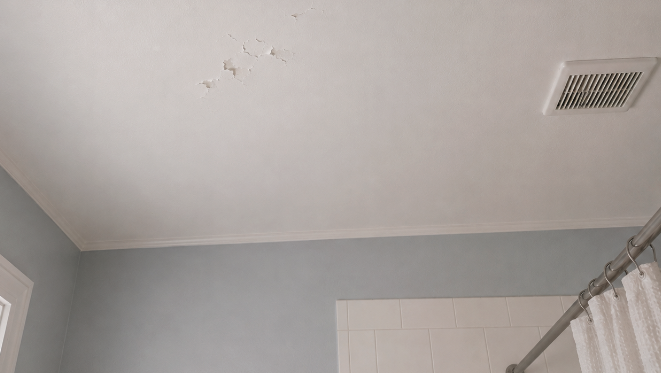
Bathroom ceiling paint can peel for more than one reason. Repeated humidity is common, but so are poor surface preparation, incompatible coatings, painting before the ceiling was fully dry, and water arriving from somewhere above.
The peeling tells you that the paint has lost its bond with the surface beneath it. It does not identify the cause by itself. The useful decision is whether the ceiling is dry and sound enough for a paint repair, whether bathroom moisture needs to be controlled first, or whether the pattern points to a leak or damaged material that belongs with another professional.
Peeling paint is an adhesion failure
Paint stays in place when it is bonded to a clean, dry, stable surface. That bond can fail when moisture repeatedly reaches the paint film or the material below it. It can also fail when new paint is applied over loose paint, residue, a glossy surface, or a ceiling that was not properly prepared.
This is why better paint alone does not always solve the problem. A bathroom-rated coating can tolerate humid conditions better than an unsuitable product, but it cannot correct an active leak, a damp substrate, or weak layers underneath.
What the pattern may be telling you
Widespread peeling above the shower
Peeling or bubbling spread across the ceiling near the shower often fits repeated condensation or high room humidity. The pattern matters most when the bathroom remains visibly damp after use, condensation lingers on upper surfaces, or the fan appears to draw little air at the grille.
A light tissue held against the grille can show whether air is being drawn into the opening. It cannot measure airflow or prove that the fan and duct system are adequate, so treat it as one observation rather than a pass-or-fail test.
One localized patch
A concentrated area of peeling, especially with yellow or brown staining, may point to water arriving from above rather than humidity throughout the room. The source could involve plumbing, another bathroom, roofing, exterior water entry, or condensation around ducting. A pattern that changes after rain or after fixtures above are used deserves investigation before the ceiling is repaired.
Peeling after a recent paint job
When the ceiling is dry and firm and the failure appeared soon after repainting, surface preparation or product compatibility may be the more likely issue. New paint applied over loose material, soap residue, dust, or a damp ceiling can release even when the room's ventilation is reasonable.
Peeling with softness, sagging, or recurring odour
Soft drywall, sagging, active dampness, spreading staining, or a musty smell that returns after cleaning moves the condition beyond a straightforward paint repair. Those signs do not identify the source, but they show that the ceiling or nearby materials may have been affected by moisture.
Where does the condition sit?
The peeling is limited, and the ceiling beneath it is dry, firm, and unstained. There is no sagging, recurring odour, or continuing change. Once loose material is removed and the surface is properly prepared, primed, and allowed to dry, repainting may be the correct response.
The peeling returns, spreads after showers, or appears alongside lingering condensation or weak draw at the fan grille. Ventilation and other moisture sources should be assessed before repainting. The ceiling repair comes after the condition creating the repeated moisture has been addressed.
The area is stained, soft, sagging, actively damp, or changing after rain or water use above. Do not treat this as a painting problem. The water source and the condition of the ceiling material need to be investigated by the appropriate building professional before surface work begins.
What to do before repainting
First, look for the pattern rather than assuming the fan is the cause. Note whether the peeling is widespread or local, whether the ceiling is dry and firm, and whether the condition changes after showers, rain, or use of plumbing above.
Do not paint over loose material or a ceiling that may still be damp. A lasting paint repair requires a sound, clean, dry surface. When moisture is part of the problem, the source has to be controlled before the finish is rebuilt.
A bathroom-rated coating can be useful once the ceiling is ready. It is the final layer of the repair, not a substitute for finding out why the earlier coating failed.
Where Emmassa’s scope begins and ends
Emmassa can assess whether a contained bathroom fan replacement fits the condition. That assessment separates visible room-humidity signs and accessible fan concerns from evidence that may point to plumbing, roofing, concealed moisture, damaged drywall, or another building issue.
When the fan is not the right answer, or when the ceiling material itself needs repair, that boundary is stated before work proceeds. Emmassa does not repair ceilings, investigate concealed leaks, or replace damaged drywall.
The goal is not to turn peeling paint into a larger project. It is to make sure the visible finish is not repaired before the condition underneath it is understood.